Knowledge · 4 min read
304 or 316L stainless steel for outdoor sculpture?
Updated: 23 November 2026
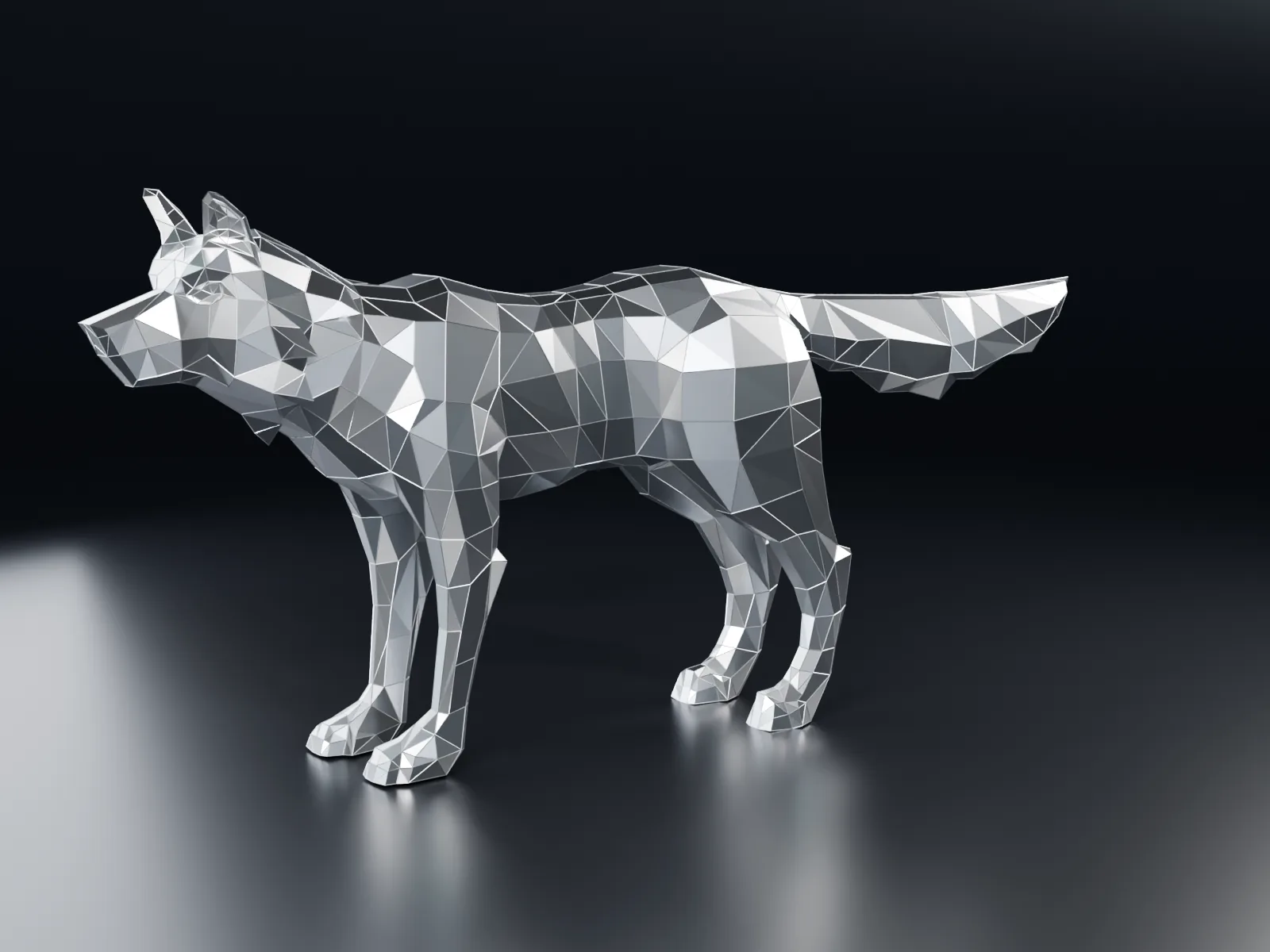
For an outdoor sculpture, choose 316L (1.4404) if it will stand by the sea, beside a road salted in winter, or near a fountain or swimming pool, because molybdenum improves resistance to chlorides. In a park or on a green well away from salt, 304 (1.4301) is usually sufficient, provided the weld seams and surface finish are executed correctly.
How 304 and 316L differ
Both steels belong to the austenitic chromium-nickel family and look practically identical once finished. Their corrosion resistance rests on a thin, self-repairing passive layer. The difference lies in the addition of molybdenum: 316L (1.4404) contains roughly 2–2.5% of it, while 304 (1.4301) contains practically none.
Molybdenum stabilises the passive layer in the presence of chloride ions. Chlorides are the main enemy of an outdoor sculpture, because they cause pitting and crevice corrosion: small, deep pits that often begin at weld seams, edges and recesses. The letter "L" denotes a reduced carbon content, which limits carbide precipitation at the grain boundaries in the heat-affected zone of the weld, thereby supporting durability after welding.
How to match the grade to the location
It is best to start by asking where chlorides might come from, rather than by looking at the price of the steel.
- Coastline and seaside promenades: salt aerosol settles on the surface and is not washed off from sheltered spots. 316L here.
- Roadsides and greens beside streets salted in winter: brine splash and salt mist reach several metres, and salt collects in recesses. 316L here.
- Fountains, swimming pools, garden ponds: chlorinated water and constant wetting. 316L here.
- Park, garden, town square away from traffic and salt: 304 is usually sufficient.
Tip: if you are unsure whether road salt is used nearby in winter, assume that it is. The difference in material cost for a sculpture is small compared with the cost of grinding out and restoring pitting after a few seasons.
What manufacturers on the market offer
The market offer is well illustrated by examples from overseas suppliers. Haoyang (China) quotes mirror-finish 304 steel at a thickness of 2 mm. Giant Sculptures (UK), in the description of its geometric stag sculpture, specifies 316 steel. This shows a practical split: 304 often appears in high-gloss decorative offers, and 316 where the manufacturer assumes a harsher environment. It is always worth asking for a material certificate, however, rather than relying solely on the product description.
Sheet thickness and faceted construction
In faceted sculptures, assembled from flat panels, sheet thicknesses of 1.5–3 mm are typically used. Thinner sheet bends more easily and ripples under welding heat, which with a mirror finish shows up immediately in the reflections. Thicker sheet gives rigidity and allows sharp edges, but increases weight and cost.
When choosing the thickness, the following matter:
- the height and slenderness of the form (large, flat panels require ribs or an internal frame),
- the finish: a high-gloss polish reveals every distortion, whereas satin and brushed finishes mask it,
- exposure to vandalism and impact at ground level.
It is also crucial that the interior of the sculpture has drainage and ventilation. Water standing in a closed section is a more frequent cause of problems than the steel grade itself.
TIG welding, passivation and cleanliness
TIG welding is used for visible weld seams in a sculpture: it gives controlled, clean beads and little distortion. The weld should fuse through the full cross-section rather than leave gaps in which moisture and salt collect.
After welding and grinding, the surface loses part of its passive layer. Passivation (chemical removal of contaminants and restoration of the protective layer) is a stage whose omission often explains early surface staining. Heat tint near weld seams must be removed mechanically or chemically, because the passive layer is weakest in that zone.
The second common mistake is contamination with carbon steel. All it takes is:
- discs and brushes previously used on carbon steel,
- sparks from grinding carbon steel nearby,
- tables, slings and supports without insulation from the stainless steel.
Iron particles embed in the surface, and after a few days of moisture rusty stains appear, which are mistakenly taken for the "wrong steel grade". That is why separate tools and a dedicated work area for stainless steel are standard.
Maintenance in service
A stainless steel sculpture is not maintenance-free, but the requirements are modest. Washing with warm water and a mild detergent, using a soft cloth or sponge, followed by thorough rinsing with clean water, is usually enough. Avoid abrasive pastes, steel wool and chlorine-based products, which damage the passive layer.
By the sea and beside roads salted in winter, wash more often, especially after the winter season and in places sheltered from rain, where salt is not washed away naturally. Isolated surface rust stains usually come off with gentle cleaning, but their recurrence in the same spot points to contamination from production or the onset of pitting corrosion and calls for assessment.
The workshop in Gryfice prepares a 3D model for approval before cutting, sends photos from every stage, and delivers a quote within 48 h.
Frequently asked questions
Will 304 rust in the rain?
In a typical urban or park environment without large amounts of salt, 304 generally performs well. Rusty stains more often result from contamination with carbon steel, heat tint left at weld seams, or a lack of passivation than from the grade itself.
Is 316L resistant to everything?
No. Molybdenum significantly improves resistance to chlorides, but 316L is not indestructible. Standing salt, crevices and neglected washing can lead to pitting in this grade too, so design and maintenance still matter.
Can I tell 304 from 316L with the naked eye?
No, by appearance it is practically impossible. The grade is confirmed by the material certificate from the sheet supplier and, in case of doubt, by testing the composition with a portable analyser.
Sources: Haoyang (China); Giant Sculptures (UK).

Custom 3D Light Figures: A Guide for Towns and Businesses
What 3D light figures are, the types available, what drives the price and how ordering works: a guide for municipalities, galleries, parks and hotels.
Silhouette 3D or 3D light figure? Choosing the right type
Silhouette 3D or 3D light figure? A comparison of construction, weight, transport and installation site, with guidance on choosing the right type of.

IP44, IP65, IP67: which LED lighting lasts an outdoor season
What IP44, IP65, IP67 and IK06 mean for outdoor LED lighting, and how to choose connector sealing, cable and voltage for seasonal installations.