Knowledge · 5 min read
Stainless steel low-poly sculptures: Pepakura style, city scale
Updated: 23 November 2026
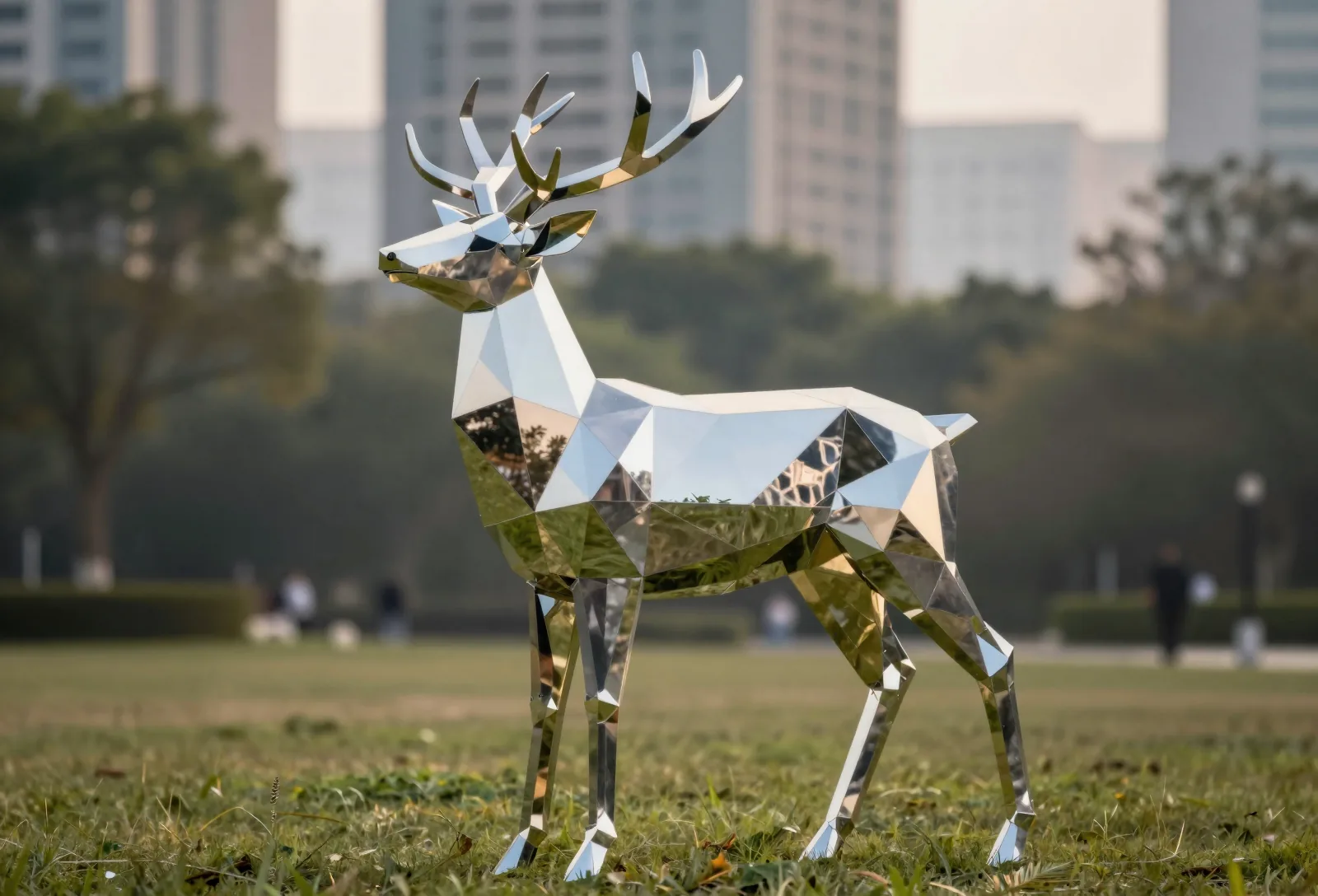
A city-scale low-poly sculpture is made by simplifying a 3D model down to a few hundred triangular or polygonal facets, unfolding them into flat parts, laser-cutting them from stainless steel sheet, and then bending, TIG welding and grinding them. It is exactly the same logic that paper unfolded models rely on, except that instead of paper and glue we work with steel and weld seams.
Where the style comes from: low-poly and paper models
Low-poly comes from 3D graphics. A figure or animal is described with a small number of triangles, so the form is sharply faceted and each facet has its own plane and its own reflection. On the other side are paper models assembled from unfoldings. The Pepakura Designer program from Tama Software turns a 3D model into an unfolded net, which is printed on paper, cut out and glued along the edges.
Both worlds share one thing: the form is legible because it is made of flat facets, and a flat facet can be made from sheet metal without forging or casting. For the structural engineer this is convenient, because every part has an unambiguous shape and can be counted, cut and checked.
From 3D model to sheet metal: how the process works
The individual stages are as follows:
- 3D model. The starting point is a solid model of an animal, figure or abstract form, most often from an artist's or architect's design.
- Simplification to a few hundred facets. We reduce the mesh so that the silhouette remains recognisable from a distance. Too few facets and the sculpture loses its character; too many and the number of weld seams and the cost both rise, while the result approaches an ordinary smooth solid.
- Unfolding into flat parts. We lay out each facet, or group of facets, on a plane. In our case we do this in our own software, because it must account for the sheet thickness, the edge bevel angles and the places where the parts will join.
- Laser cutting. The unfoldings are cut from stainless steel sheet. The laser gives a repeatable contour, and markings can be added so that during assembly each part ends up in its proper place.
- Bending and TIG welding. We assemble the parts into a solid, usually on an internal frame or in a jig. TIG welding produces a narrow, controlled weld seam, which matters greatly where edges are visible.
- Weld seam grinding. We dress the weld seams so that the facet edge is sharp and continuous, without a raised "seam".
- Finishing. Mirror finish, satin finish or colour, as described below.
- Optional lighting. LED lighting built into the sculpture or directed at it.
A practical tip: what determines the look of a low-poly sculpture is not so much the number of facets as where the edges are run. Well-placed folds catch the light and build the silhouette; badly placed ones give a "crumpled" solid. It is worth checking this on the model before anyone cuts the first part.
Finishing: mirror, satin, colour
The same model looks completely different depending on the surface.
- Mirror finish. Each facet reflects a different piece of the surroundings: sky, trees, buildings, passers-by. The sculpture changes with the hour and the weather. It does, however, demand great care over the flatness of the sheets, because any distortion from welding is visible on a mirror finish.
- Satin finish. Matt, directional brushing diffuses the reflection. The form is calmer, minor irregularities are less visible, and the sculpture "glares" less in a photograph under harsh sun.
- Colour. A paint coating gives full control over the hue and works where the sculpture is meant to be a landmark of the place. Some of the metal's effect, which reflects its surroundings, is lost in the process.
Why low-poly works in public space
There are three main reasons:
- A form that reads from afar. Large, distinct planes are recognisable from several dozen metres, which cannot be said of a sculpture with fine detail.
- Reflection of the surroundings. Stainless steel with a polished or semi-polished surface places the sculpture within its context rather than cutting it off from it.
- A good photo spot. A faceted, gleaming solid looks good in photographs and is readily photographed by residents and tourists, which matters for the image of a town square or a green.
How it differs from casting and from a mesh figure
| Feature | Sheet-metal low-poly | Casting | Mesh figure |
|---|---|---|---|
| Technology | Laser cutting, bending, TIG welding | Mould, casting, finishing | Frame and mesh, often hand-formed |
| Character of the form | Sharp edges, flat facets | Fluid, organic shapes | Transparent, "openwork" silhouette |
| Light reflection | Strong, varies by facet | Depends on patina and finishing | Weak, light through the mesh dominates |
| Repeatability of parts | High, parts from unfoldings | High, but only once the mould is made | Low |
Casting works where a soft, richly detailed figurative sculpture matters. A mesh figure is light and transparent, but does not give the same reflective effect or such a distinct solid. Sheet-metal low-poly sits in between: it is rigid, durable and structurally predictable, and in return it accepts a geometric, faceted language of form.
Market prices: a point of reference
To get a sense of scale, you can look at what is on offer. On the 1stDibs platform, the average price in the "steel polygonal sculpture" category is USD 3,940, with a minimum of USD 989 and a maximum of USD 10,356. These are, however, mainly collectors' and decorative sculptures, not city-scale commissions.
A Chinese manufacturer (Mily, Quyang) lists a geometric stag at USD 1,699–3,299, as shown in the Mily catalogue. Such amounts should not be carried over directly to a municipal project. A sculpture standing in public space requires structural calculations, a foundation, anchoring, and resistance to wind and vandalism, and its cost depends on height, sheet thickness, the number of facets and the finish. We therefore treat both figures solely as an order of magnitude for the market.
With us, a project begins with a 3D model for approval before cutting, we send photos from every stage, and we prepare the quote within 48 hours.
Frequently asked questions
Does a low-poly sculpture have to have a few hundred facets?
No, that is an indicative figure for larger, legible figures. The number of facets is chosen to suit the scale and the viewing distance. Fewer facets mean a simpler and cheaper construction; more give a smoother silhouette at the cost of more weld seams.
What is Pepakura, and is it used for metal?
Pepakura Designer from Tama Software is a program for unfolding 3D models into nets for printing on paper. For metal it serves as an inspiration for the method, while we produce the unfolding for sheet metal in our own software, which accounts for the material thickness, the edge bevels and the welding.
Mirror or satin finish: which to choose for an outdoor sculpture?
Mirror finish gives the strongest reflection of the surroundings, but it reveals every distortion of the sheet and needs cleaning more often. Satin finish is visually calmer and more forgiving. The choice depends on whether the sculpture is meant to draw the eye or blend into its setting.
Sources: Tama Software, Pepakura Designer; 1stDibs, steel polygonal sculpture; Mily, stainless steel sculpture.

Custom 3D Light Figures: A Guide for Towns and Businesses
What 3D light figures are, the types available, what drives the price and how ordering works: a guide for municipalities, galleries, parks and hotels.
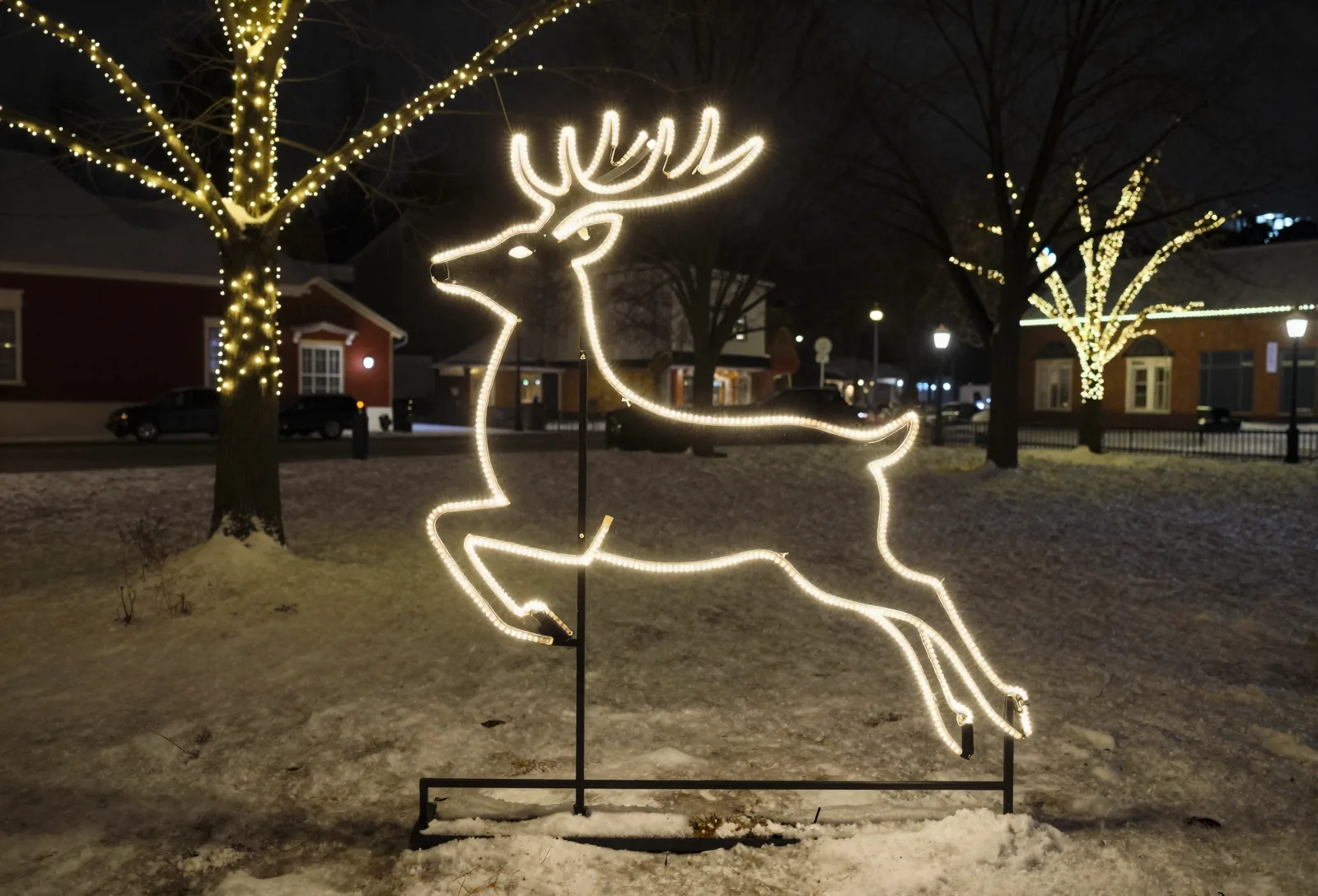
Silhouette 3D or 3D light figure? Choosing the right type
Silhouette 3D or 3D light figure? A comparison of construction, weight, transport and installation site, with guidance on choosing the right type of.
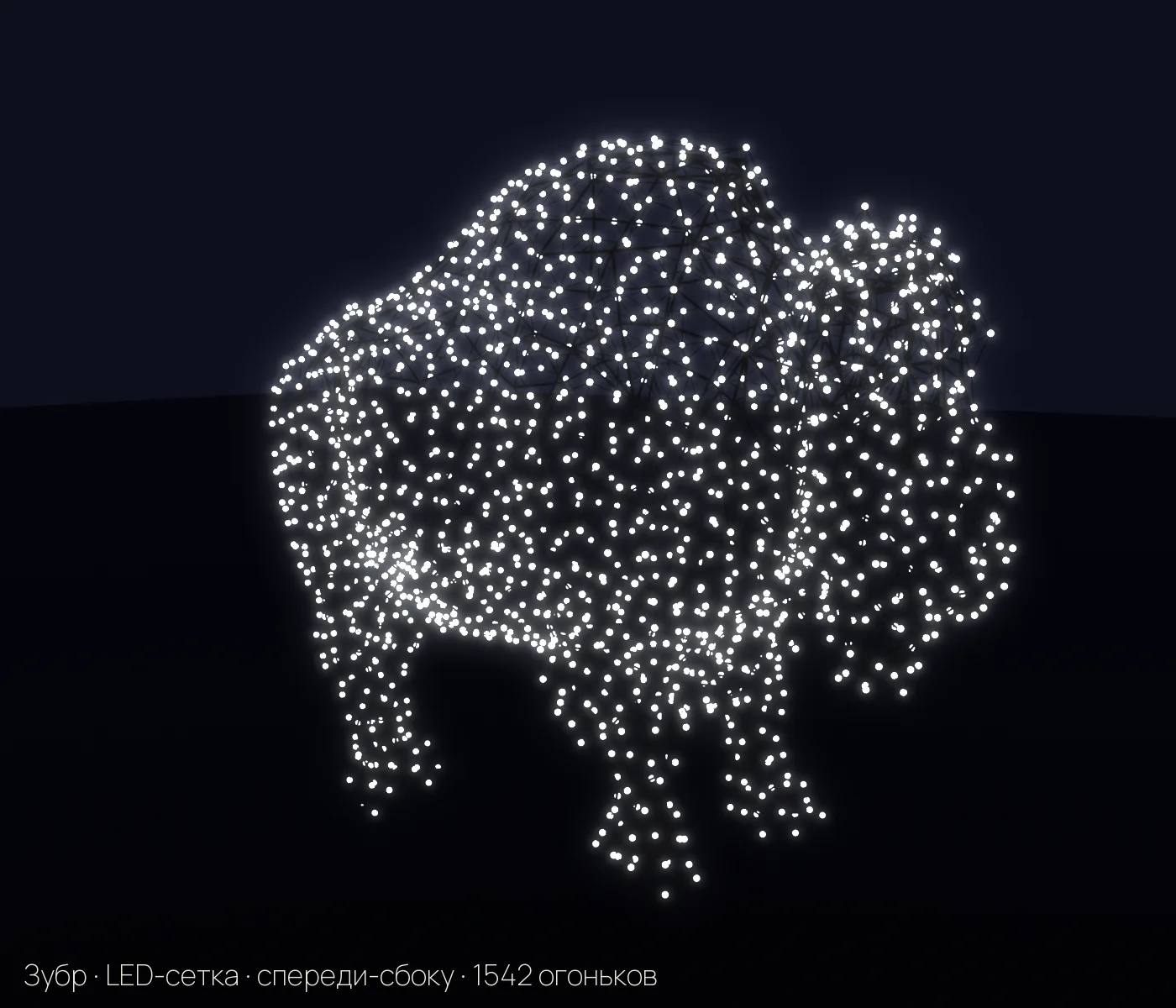
IP44, IP65, IP67: which LED lighting lasts an outdoor season
What IP44, IP65, IP67 and IK06 mean for outdoor LED lighting, and how to choose connector sealing, cable and voltage for seasonal installations.