Knowledge · 4 min read
String lights, LED rope or neon flex: lighting a light figure
Updated: 23 November 2026
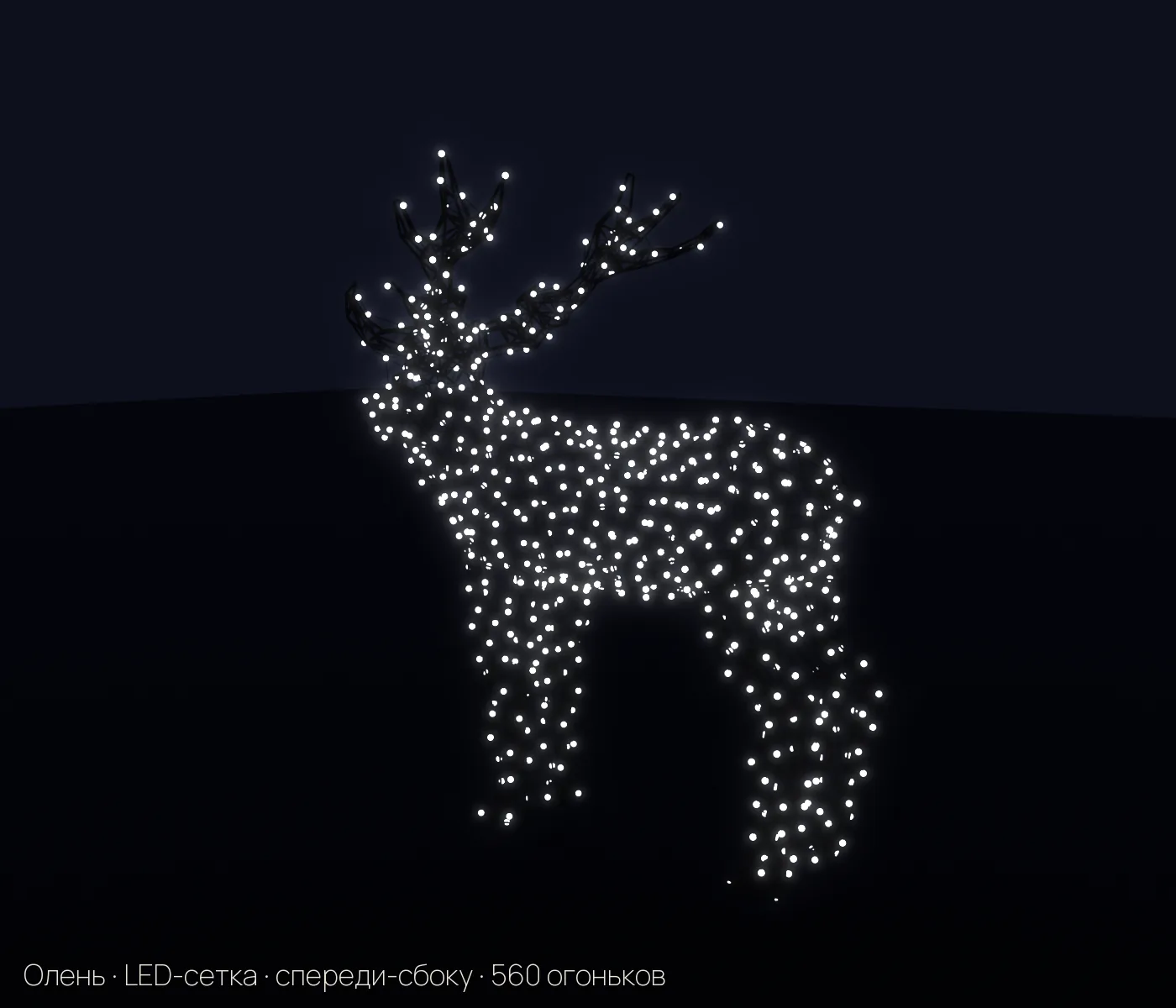
There is no single best light: a silhouette outline is made with LED rope light or neon flex, while infill and three-dimensional forms call for string lights. A 3D rod figure should be lit with string lights only, because a glowing outline on a solid form merges into a "white mask". A steel sculpture is best lit with LED lines in the weld seams, light from within, or floodlights.
Three types of light and how they differ
String lights are a rubber-sheathed cable with light points spaced every few to a dozen or so centimetres. They create a "stars" effect: the light is point-like, visible from a distance as scattered dots. In the flash version, every nth point can blink, which brings the surface to life without changing the rest of the lighting.
LED rope light (duralight) is a continuous line of light inside a transparent sheath. It glows evenly along its entire length, so it draws outlines and edges well. It is available in warm white, cool white and colours, with an option for selected diodes to flicker.
Neon flex is a thick, even line that glows like classic neon but is flexible and light. No individual points are visible in it. It is used for silhouette outlines where a "sketched", uniform stroke is wanted.
A practical comparison
| Feature | String lights | LED rope light | Neon flex |
|---|---|---|---|
| Character of the light | point-like, "stars" | continuous line with a slight diode raster | continuous, uniform, thick line |
| Best use | infill, 3D forms | outlines, edges | silhouette outlines |
| Flicker effect | every nth point (flash) | selected diodes flashing | usually steady light |
| Risk on a 3D form | low | high ("white mask") | high ("white mask") |
Flat and semi-3D silhouettes: outline plus infill
For a Silhouette 3D, meaning a structure with a clear outline and little depth, a two-layer arrangement works well. We run the outline in LED rope light or neon flex and fill the interior with string lights. The outline separates the figure from the background and shows its shape clearly from a long distance. The string lights add texture and a sense of density, and the optional blinking of every nth point makes the surface "work" without overloading the eye.
Colour contrast works well: the outline in one colour or white, the infill in another shade. For a single figure in cool white, an outline and infill in the same colour give a cohesive, icy effect. Warm white suits figures of a festive, traditional character.
3D light figure: string lights along the rods only
When a figure has a genuine solid form, for example a rod sculpture seen from several sides, a glowing outline works against it. From every direction the lines overlap, and the eye sees a single bright patch instead of a shape. This is precisely the "white mask" effect: the form loses legibility even though more light has been used.
The solution is string lights run along the rods of the structure. Light points distributed through space build volume, and the gaps between them leave the figure room to "breathe". In such an arrangement what matters is the density of the points and the even distribution of the string lights across the whole form, not the brightness of a single line.
Practical tip: if a figure is viewed from many sides, give up the continuous outline in favour of string lights. A continuous line only makes sense where there are one or two viewing directions.
Steel sculpture: light built into the structure
In a sculpture made from steel sheet and sections, the light does not have to sit on the surface. LED lines can be concealed in the weld seams and the gaps between elements, so that the edges of the structure itself glow rather than a cable laid over it. The second option is lighting from within, when the form is hollow or has openings. The third is floodlights, which model the form with light directed from outside and emphasise the texture of the steel.
This variant requires planning at the design stage: cable routing, service access and drainage of water from the interior. Adding lighting after welding usually means compromises, so the decision on how to light the piece is best made before cutting begins.
What to look for in the specification
When choosing LED rope light, the parameters that matter are those that appear in tender documents. An example specification from documentation on platformazakupowa.pl requires LED rope light with a diameter of 13 mm and at least 30 diodes per metre, with every fifth diode flashing cool white. It also provides for double-insulated cable, quick connectors and diode protection with a polycarbonate cap.
- Diode density per metre determines whether the line looks continuous or "dotted".
- The flashing function (e.g. every fifth diode) should be stated explicitly, including the colour of the flashing diodes.
- Cable insulation protects an installation that runs outdoors throughout the season.
- Quick connectors shorten installation and servicing, because they allow a section to be replaced without soldering.
- A polycarbonate diode cover limits mechanical damage.
A similar set of questions is worth asking about string lights and neon flex: the spacing between points, the method of power supply and of joining sections, and the possibility of replacing a damaged segment.
How to make the decision
- Determine from how many sides the figure will be viewed: one or two (an outline works) or all of them (string lights).
- Choose the colour: warm white, cool white or a colour, and keep to it across the whole figure, or deliberately pair two.
- Decide whether blinking is needed, and on which layer (usually on the infill, not on the outline).
- For steel, plan the cabling and lighting before welding.
In our workshop in Gryfice we produce a 3D model for approval before cutting, send photos from every stage, and prepare the quote within 48 hours.
Frequently asked questions
Can LED rope light and string lights be combined on a single figure?
Yes, and it is a common arrangement for silhouettes: LED rope light or neon flex draws the outline, while string lights fill the interior. On a 3D light figure viewed from all sides, it is better to stick with string lights alone.
Why does a glowing outline look worse on a 3D form?
From different directions the continuous lines overlap and create a bright patch instead of a legible shape. String lights distribute the light as points in space, so they preserve the volume of the figure.
How does neon flex differ from LED rope light?
LED rope light gives a thin line in which, at lower diode density, individual points can be seen. Neon flex is thicker and glows evenly like classic neon, which is why it renders silhouette outlines better.
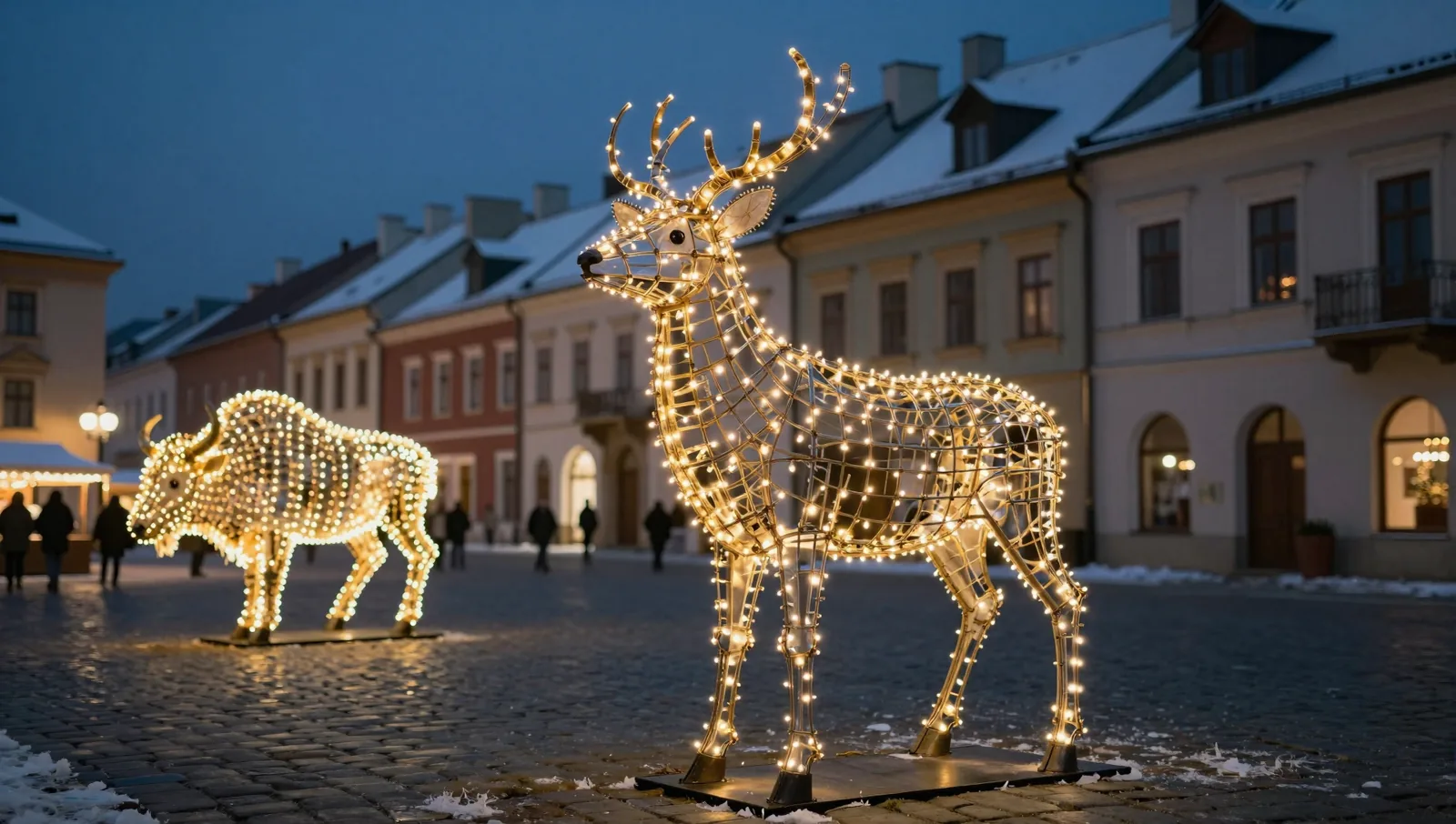
Custom 3D Light Figures: A Guide for Towns and Businesses
What 3D light figures are, the types available, what drives the price and how ordering works: a guide for municipalities, galleries, parks and hotels.
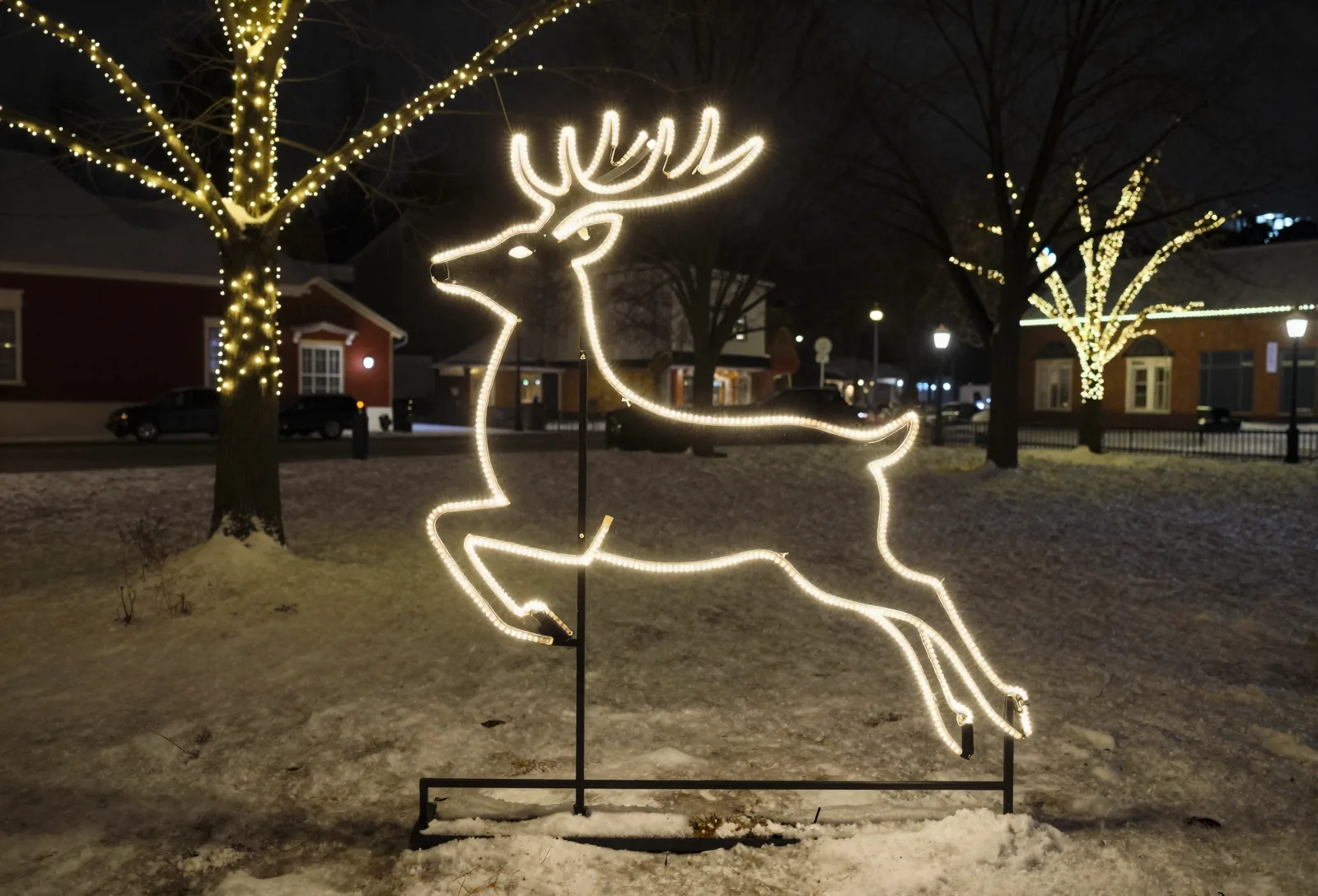
Silhouette 3D or 3D light figure? Choosing the right type
Silhouette 3D or 3D light figure? A comparison of construction, weight, transport and installation site, with guidance on choosing the right type of.
IP44, IP65, IP67: which LED lighting lasts an outdoor season
What IP44, IP65, IP67 and IK06 mean for outdoor LED lighting, and how to choose connector sealing, cable and voltage for seasonal installations.