Knowledge · 4 min read
How much power does a light figure use? 24/36 V LED in practice
Updated: 23 November 2026
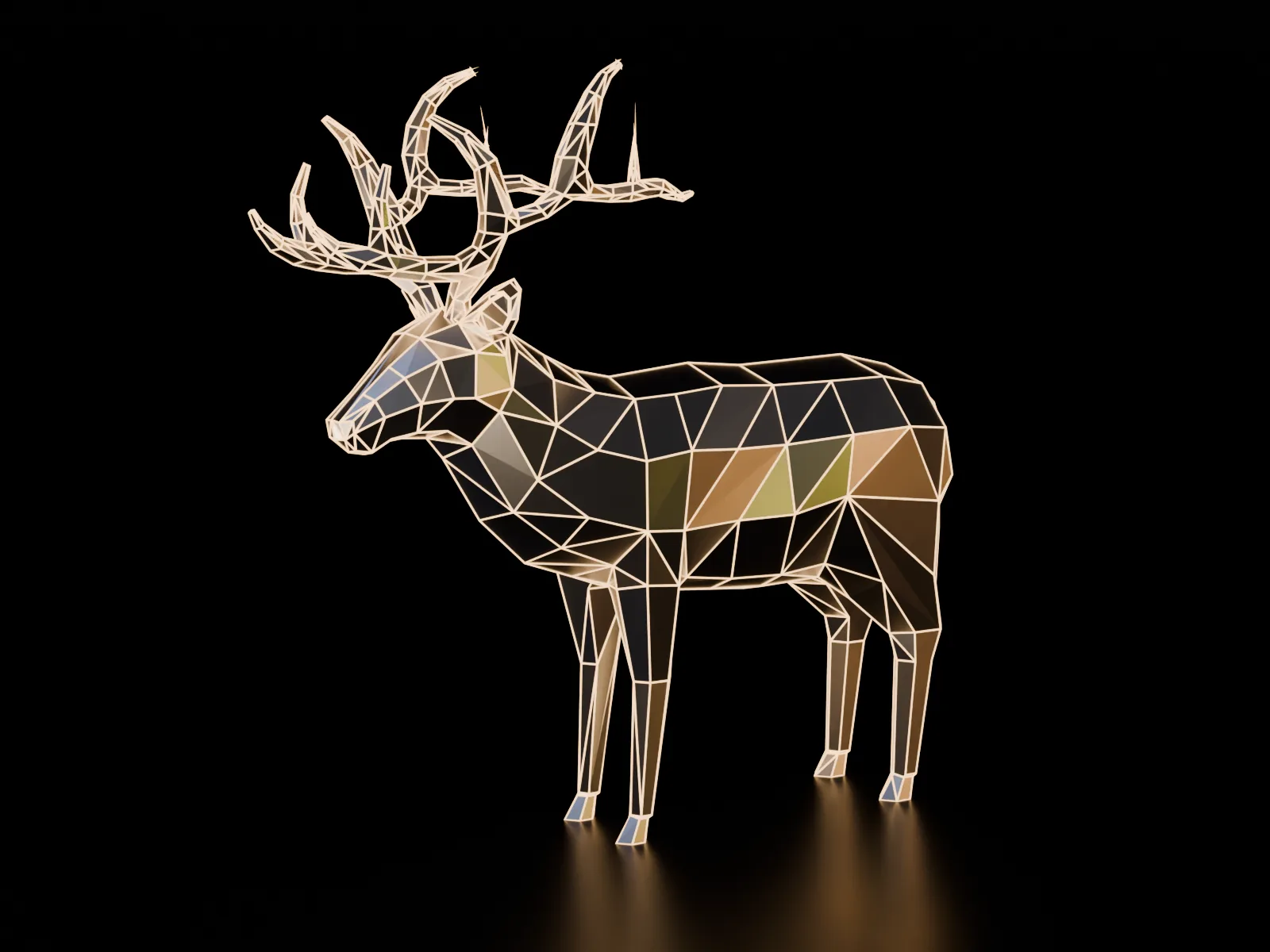
An LED light figure uses very little power: a 3D stag 3.5 m tall, described in the tender documentation as an object rated at up to 45 W, draws about 16.2 kWh over a whole season when lit for 6 hours a day for 60 days. Consumption is calculated with a simple formula: power [W] × hours per day × days in the season / 1000 = kWh, and the cost follows from the energy price in the municipality's contract.
The energy consumption formula
Electricity consumption is the product of power and operating time. Power is given in watts and time in hours, and we divide the result by 1000 to obtain kilowatt-hours, the unit used to bill electricity invoices.
E [kWh] = power [W] × lighting hours per day × number of days in the season / 1000
The formula needs three pieces of data: the power from the figure's documentation (we always check the maximum value, not the "typical" one), the lighting schedule set by the contracting authority, and the length of the season. Only the final step, multiplying the kWh by the energy price, requires data from the municipality's contract. The price should be taken from your own sales contract or your latest invoice, because it differs between customers and changes over time.
Example: 3D stag, 3.5 m
Let us take an item from the tender's description of the subject of the contract: a 3D stag 3.5 m tall, at least 1560 LEDs, power up to 45 W, voltage up to 36 V (documentation on platformazakupowa.pl). We assume lighting for 6 hours a day for 60 days.
- Daily consumption: 45 W × 6 h = 270 Wh, or 0.27 kWh.
- Seasonal consumption: 270 Wh × 60 days = 16,200 Wh.
- Conversion to kilowatt-hours: 16,200 / 1000 = 16.2 kWh.
To find the cost of a single figure, we multiply 16.2 kWh by the price per kWh from the contract. For a whole illumination scheme, we add up the consumption of all the objects. Power supplies and cabling add minor losses, so when planning a budget it is worth adding a margin rather than calculating to the last watt-hour.
Two things affect the result most: the "up to 45 W" rating is a maximum value, so actual draw with dimmed or animated sequences may be lower, and the number of hours, which the contracting authority sets itself.
Why LED and low voltage
More than 1560 LEDs in one figure fit within a power rating of up to 45 W, because LEDs convert a larger share of energy into light than old-style bulbs, and low-voltage supply allows them to be connected in safe, modular circuits. Voltage of up to 36 V on the figure side, instead of mains 230 V, has several practical consequences:
- a lower risk of electric shock during installation and servicing in public spaces, which matters for figures standing within reach of passers-by;
- the power supply (a transformer or switch-mode power supply) can be housed in a cabinet or enclosure, with a light low-voltage cable run to the figure;
- the failure of a single module does not switch off the whole figure, provided the construction is based on independent sections.
Low voltage requires attention to cable cross-section: for the same power the current is higher than in a 230 V circuit, so a cable that is too thin or too long causes a voltage drop and dimmer lighting at the end of the line. This is a matter of power supply design rather than energy consumption, but it is worth taking into account at the request for quotation stage.
Control: where power is really saved
A figure's power rating is fixed, so lighting time has the greatest effect on the bill. In our formula these are two multipliers: hours per day and days in the season. That is why control brings more than comparing figures with a small difference in watts.
- An astronomical timer switches the lighting on at sunset and off at a set hour or at sunrise, without manually adjusting the clock as day length changes.
- Switching off at night is the simplest way to shorten lighting time: an illumination that nobody sees between midnight and dawn does not need to run.
- The season can be shortened by installing and switching on the illumination later and dismantling it earlier.
The effect is immediately visible in the formula. The same stag at 4 hours instead of 6 will use: 45 W × 4 h × 60 days / 1000 = 10.8 kWh, which is one third less than 16.2 kWh. Cutting lighting time by an hour a day works proportionally on all the figures at once.
Context: municipalities and saving on illuminations
Contracting authorities ask about power consumption today because illumination budgets are under pressure. An example is Ruda Śląska, which, according to a report by naszemiasto.pl, cut back its festive decorations in order to save energy. For the designer and the contractor, this translates into specific requirements for the tender submission.
- In the description of the subject of the contract, it is worth requiring the maximum power of each figure and the supply voltage, as in the tender cited above.
- The contracting authority should define the lighting schedule in advance, because consumption depends on it, not on the figure itself.
- Tenders should be compared on seasonal consumption for the same schedule, not on declared "energy efficiency".
The workshop in Gryfice makes light figures to order: before any steel is cut we prepare a 3D model for approval, we send photos from every stage, and we provide a quote within 48 hours.
Frequently asked questions
How many kWh does one 45 W LED figure use?
With 6 hours of lighting a day for 60 days, it uses 16.2 kWh per season (45 W × 6 h × 60 days / 1000). With a different schedule, the result changes in proportion to the number of hours and days.
How do I convert energy consumption into cost?
We multiply the result in kWh by the energy price from the municipality's contract or latest invoice. We do not assume the price in advance, because it depends on the tariff and the contract of the individual customer.
Does a rating of "up to 45 W" mean the figure always draws 45 W?
No, it is a maximum value. For budget planning it is safe to calculate from it, while the actual draw, especially with dimming or animation sequences, may be lower.
Sources: tender documentation, platformazakupowa.pl; naszemiasto.pl, Ruda Śląska.
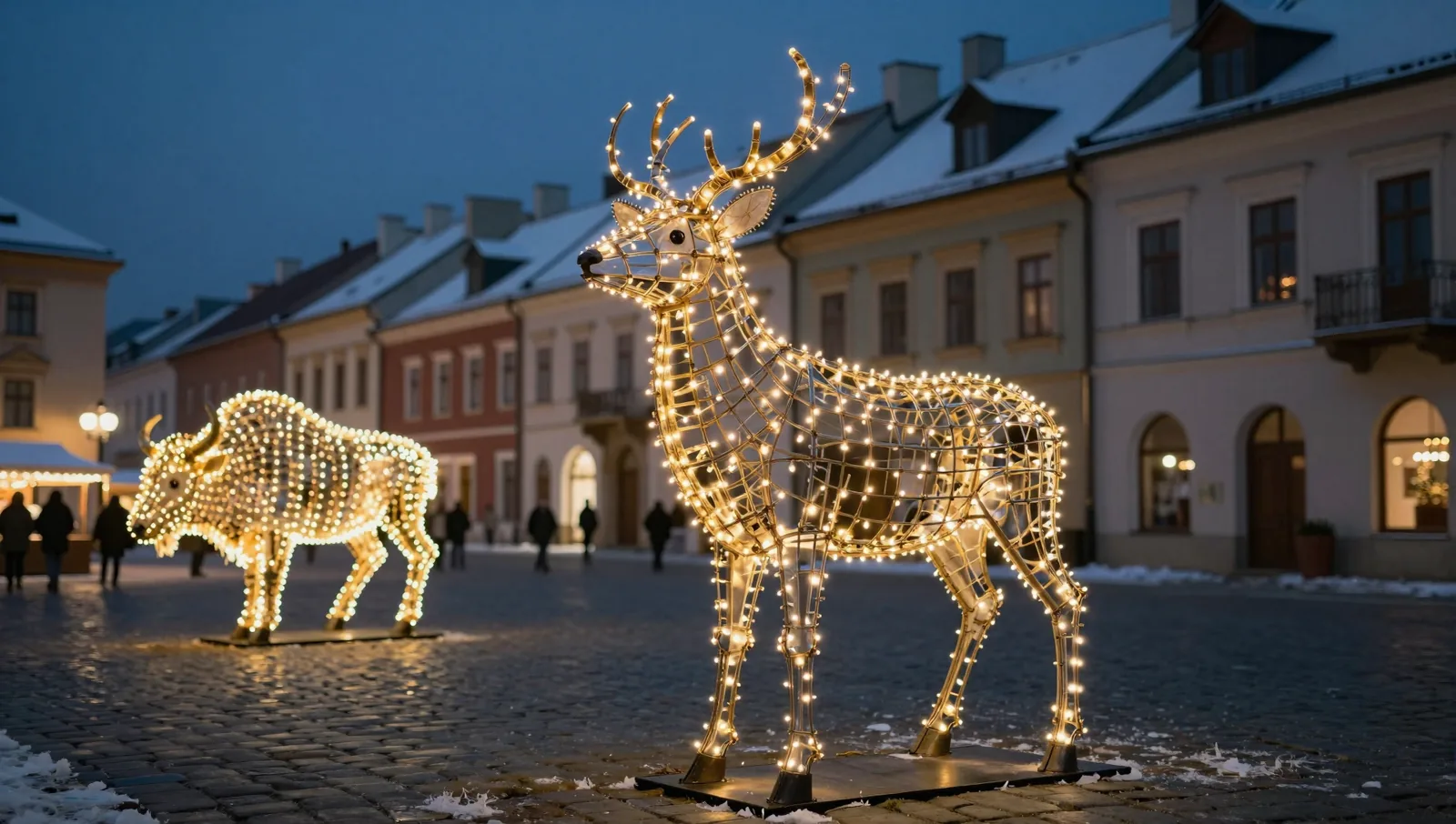
Custom 3D Light Figures: A Guide for Towns and Businesses
What 3D light figures are, the types available, what drives the price and how ordering works: a guide for municipalities, galleries, parks and hotels.
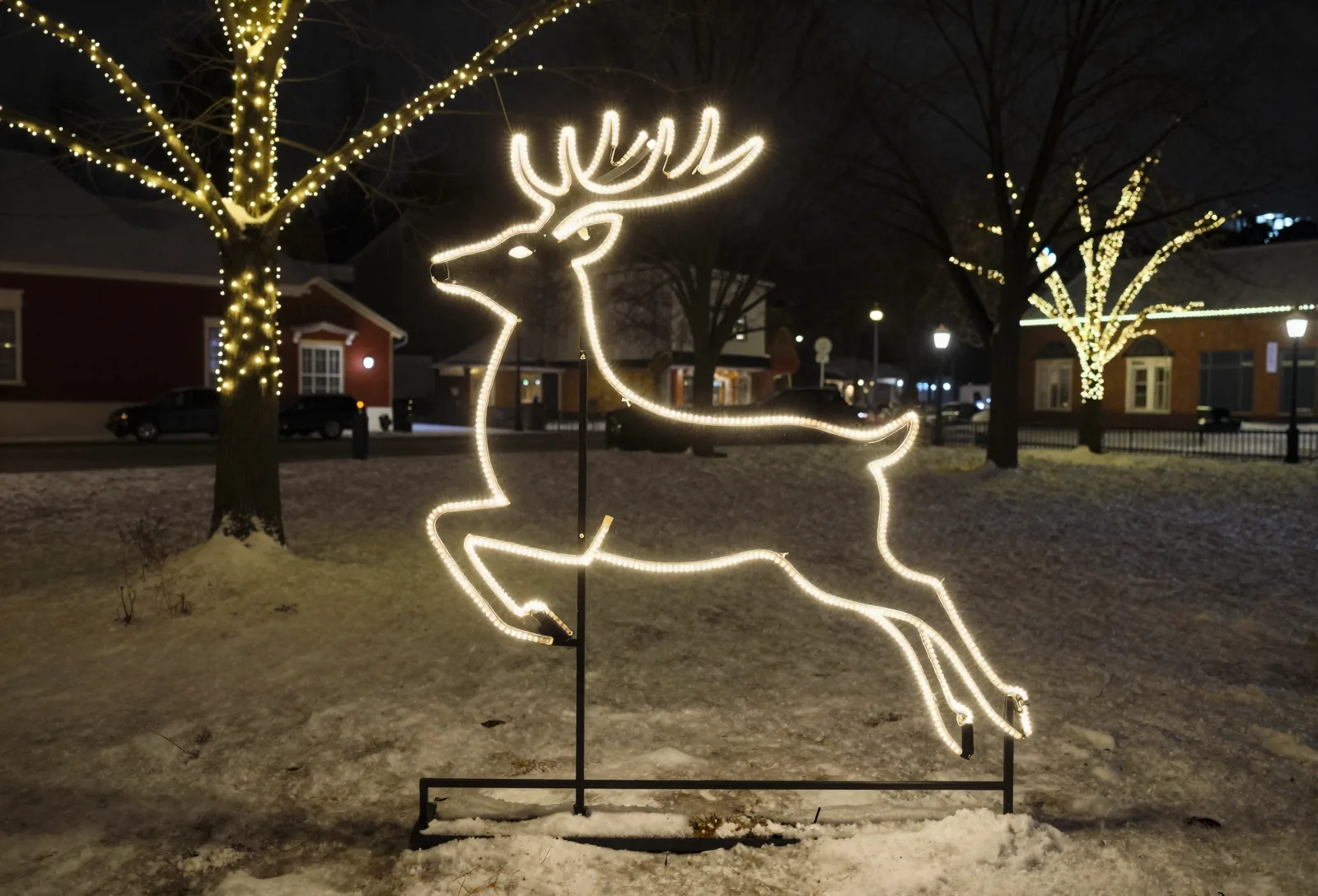
Silhouette 3D or 3D light figure? Choosing the right type
Silhouette 3D or 3D light figure? A comparison of construction, weight, transport and installation site, with guidance on choosing the right type of.
IP44, IP65, IP67: which LED lighting lasts an outdoor season
What IP44, IP65, IP67 and IK06 mean for outdoor LED lighting, and how to choose connector sealing, cable and voltage for seasonal installations.